The Prophet by Kahlil Gibran: Quotes on Love, Work and Joy
The best quotes from Kahlil Gibran's The Prophet (1923), now public domain: on love, marriage, children, work, joy and sorrow, pain and death, with notes.
In this article
- About The Prophet
- Quotes from On Love
- Quotes from On Marriage
- Quotes from On Children
- Quotes from On Giving
- Quotes from On Work
- Quotes from On Joy and Sorrow, and On Pain
- Quotes from On Houses
- Quotes on the self, reason and teaching
- Quotes from On Friendship and On Talking
- Quotes from On Religion and On Death
- Why The Prophet still speaks to people
- How to read The Prophet
- Read The Prophet in Soulfeed
The most loved quotes from Kahlil Gibran’s The Prophet are short and memorable: “Work is love made visible”, “Your joy is your sorrow unmasked”, “let there be spaces in your togetherness”, and “Your children are not your children. They are the sons and daughters of Life’s longing for itself.” The Prophet was published in 1923 and is now in the public domain, so the passages below are quoted exactly as Gibran wrote them in English, grouped by the chapter they come from, with a few notes on each.
About The Prophet
Kahlil Gibran (1883 to 1931) was born in the mountain village of Bsharri in what is now Lebanon and emigrated to Boston with his family as a boy. He became a painter and a poet in both Arabic and English. The Prophet, published in New York in 1923 with his own drawings, is his best-known work.
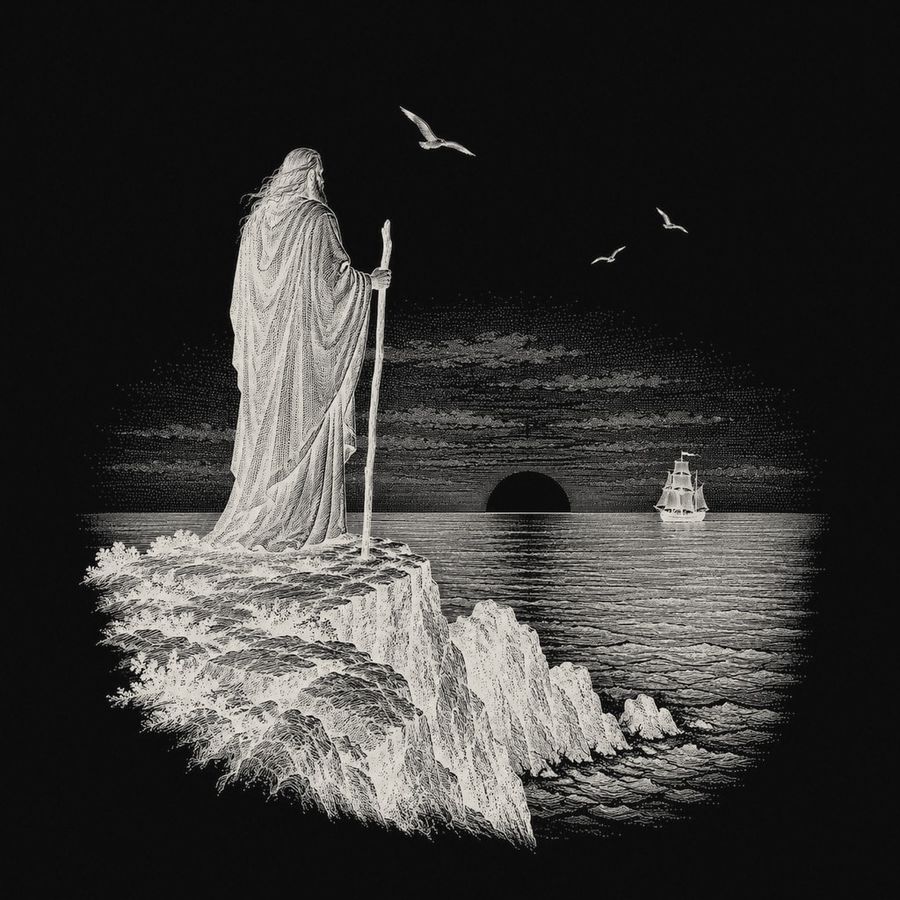
The book has a simple frame. Almustafa, “the chosen and the beloved”, has waited twelve years in the city of Orphalese for the ship that will carry him home. When it finally appears, the people gather and ask him to speak before he goes. One asks about love, another about marriage, another about children, work, houses, crime and punishment, friendship, time, prayer and death. Each of the 26 chapters is his answer.
Gibran wrote The Prophet in English, so there is no translation to choose between. The text below follows the 1923 edition.
Quotes from On Love
When love beckons to you, follow him, Though his ways are hard and steep.
Kahlil Gibran, The Prophet, “On Love” (1923)
When you love you should not say, “God is in my heart,” but rather, “I am in the heart of God.” And think not you can direct the course of love, for love, if it finds you worthy, directs your course.
Kahlil Gibran, The Prophet, “On Love” (1923)
Love has no other desire but to fulfil itself.
Kahlil Gibran, The Prophet, “On Love” (1923)
Gibran’s love is not gentle in the greeting-card sense. In the same chapter he says love will “thresh” and “sift” and “grind” you. Love, for him, is a fire that makes you more fully yourself, which is why it can hurt.
Quotes from On Marriage
Love one another, but make not a bond of love: Let it rather be a moving sea between the shores of your souls. Fill each other’s cup but drink not from one cup.
Kahlil Gibran, The Prophet, “On Marriage” (1923)
But let there be spaces in your togetherness, And let the winds of the heavens dance between you.
Kahlil Gibran, The Prophet, “On Marriage” (1923)
And stand together yet not too near together: For the pillars of the temple stand apart, And the oak tree and the cypress grow not in each other’s shadow.
Kahlil Gibran, The Prophet, “On Marriage” (1923)
These lines are read at many weddings, and they are a quietly radical thing to say on a wedding day: closeness needs room. Two pillars hold up one roof precisely because they do not lean on each other.
Quotes from On Children
Your children are not your children. They are the sons and daughters of Life’s longing for itself. They come through you but not from you, And though they are with you yet they belong not to you.
Kahlil Gibran, The Prophet, “On Children” (1923)
You may give them your love but not your thoughts, For they have their own thoughts. You may house their bodies but not their souls, For their souls dwell in the house of tomorrow, which you cannot visit, not even in your dreams.
Kahlil Gibran, The Prophet, “On Children” (1923)
You are the bows from which your children as living arrows are sent forth.
Kahlil Gibran, The Prophet, “On Children” (1923)
The chapter ends with God as the Archer, who “loves also the bow that is stable”. Parents are asked not to hold on, but to bend well, and to be glad in the bending.
Quotes from On Giving
You give but little when you give of your possessions. It is when you give of yourself that you truly give.
Kahlil Gibran, The Prophet, “On Giving” (1923)
And there are those who have little and give it all. These are the believers in life and the bounty of life, and their coffer is never empty.
Kahlil Gibran, The Prophet, “On Giving” (1923)
Quotes from On Work
Work is love made visible.
Kahlil Gibran, The Prophet, “On Work” (1923)
When you work you are a flute through whose heart the whispering of the hours turns to music.
Kahlil Gibran, The Prophet, “On Work” (1923)
And what is it to work with love? It is to weave the cloth with threads drawn from your heart, even as if your beloved were to wear that cloth.
Kahlil Gibran, The Prophet, “On Work” (1923)
Gibran is unsentimental here too. If you bake bread with indifference, he says, “you bake a bitter bread that feeds but half man’s hunger”. The point is not that all work is lovely. It is that love is what makes any work whole.
Quotes from On Joy and Sorrow, and On Pain
Your joy is your sorrow unmasked. And the selfsame well from which your laughter rises was oftentimes filled with your tears.
Kahlil Gibran, The Prophet, “On Joy and Sorrow” (1923)
The deeper that sorrow carves into your being, the more joy you can contain. Is not the cup that holds your wine the very cup that was burned in the potter’s oven?
Kahlil Gibran, The Prophet, “On Joy and Sorrow” (1923)
Your pain is the breaking of the shell that encloses your understanding.
Kahlil Gibran, The Prophet, “On Pain” (1923)
Rumi says something close in the Masnavi: “The opposite of light shows what is light.” See our Rumi quotes for the full passage.
Quotes from On Houses
Or have you only comfort, and the lust for comfort, that stealthy thing that enters the house a guest, and then becomes a host, and then a master?
Kahlil Gibran, The Prophet, “On Houses” (1923)
A century old, and a precise description of how a habit takes over. Guest, host, master: it is worth asking which of those your phone is.
Quotes on the self, reason and teaching
Your reason and your passion are the rudder and the sails of your seafaring soul. If either your sails or your rudder be broken, you can but toss and drift, or else be held at a standstill in mid-seas.
Kahlil Gibran, The Prophet, “On Reason and Passion” (1923)
Say not, “I have found the truth,” but rather, “I have found a truth.”
Kahlil Gibran, The Prophet, “On Self-Knowledge” (1923)
For self is a sea boundless and measureless.
Kahlil Gibran, The Prophet, “On Self-Knowledge” (1923)
If he is indeed wise he does not bid you enter the house of his wisdom, but rather leads you to the threshold of your own mind.
Kahlil Gibran, The Prophet, “On Teaching” (1923)
Quotes from On Friendship and On Talking
And let there be no purpose in friendship save the deepening of the spirit.
Kahlil Gibran, The Prophet, “On Friendship” (1923)
You talk when you cease to be at peace with your thoughts.
Kahlil Gibran, The Prophet, “On Talking” (1923)
Quotes from On Religion and On Death
Your daily life is your temple and your religion. Whenever you enter into it take with you your all.
Kahlil Gibran, The Prophet, “On Religion” (1923)
If you would indeed behold the spirit of death, open your heart wide unto the body of life. For life and death are one, even as the river and the sea are one.
Kahlil Gibran, The Prophet, “On Death” (1923)
For what is it to die but to stand naked in the wind and to melt into the sun?
Kahlil Gibran, The Prophet, “On Death” (1923)
Why The Prophet still speaks to people
The Prophet borrows freely from many traditions: the cadence of the King James Bible Gibran grew up with, the Sufi poets he loved, and a broad, universal sense of the sacred. It does not ask you to belong to anything. It takes the ordinary parts of a life (a marriage, a child, a job, a house, a friendship, a death) and treats each one as a doorway to something larger.
That is also why it works so well in small pieces. Each chapter is two or three pages. You can read one in the time it takes a kettle to boil and think about it all day.
How to read The Prophet
- Read it in order once. The frame story (the ship arriving, the farewell) gives the chapters their tenderness.
- Then go by need. Read “On Marriage” before a wedding, “On Children” on a hard parenting day, “On Work” on a Monday, “On Death” when you are grieving.
- Stay with one line. Pick the sentence that catches you and carry it through the day.
Soulfeed’s The Prophet, a week plan takes seven days with Gibran on love, work, joy and sorrow, one passage a day with a short explanation and a question to sit with. The Visionaries path also includes Emerson’s Self-Reliance and The Over-Soul, and Thoreau’s Walden. For more on building the habit, see our guide to daily spiritual reading plans.
Read The Prophet in Soulfeed
Soulfeed is an iPhone app that replaces the noisy scroll with a feed of spiritual teachings, including The Prophet, with a modern rendering, meaning and a reflection question for every passage. If you are trying to swap doomscrolling for something better, Gibran is a good place to start. Learn more in What is Soulfeed? or visit the Soulfeed home page.
Frequently asked questions
What is The Prophet by Kahlil Gibran about?
The Prophet is a book of 26 short prose poems set inside a simple story. Almustafa, a prophet who has lived twelve years in the city of Orphalese, is about to sail home. Before he leaves, the people ask him to speak on love, marriage, children, giving, work, joy and sorrow, death and other subjects, and each chapter is his answer.
Is The Prophet in the public domain?
The Prophet was first published in 1923 and entered the public domain in the United States in 2019. Gibran died in 1931, so it is also out of copyright in countries where protection lasts 70 years after the author's death.
What does Gibran say about marriage in The Prophet?
He says: 'let there be spaces in your togetherness, And let the winds of the heavens dance between you,' and compares a married couple to the pillars of a temple, which stand apart while holding up the same roof.
Where does 'Work is love made visible' come from?
It comes from the chapter On Work in Kahlil Gibran's The Prophet (1923).
What does Gibran say about children?
In On Children he writes: 'Your children are not your children. They are the sons and daughters of Life's longing for itself.' He compares parents to bows from which children are sent forth as living arrows.