Marcus Aurelius Quotes From Meditations, With Book and Section
The best Marcus Aurelius quotes from Meditations in George Long's public-domain translation, with book and section numbers, plus Epictetus and Seneca.
In this article
- Who was Marcus Aurelius?
- About this translation
- On mornings and difficult people
- On the mind and its judgments
- On calm under pressure
- On time and death
- On character and action
- On other people
- The same thoughts in 1634: Meric Casaubon
- More Stoic quotes: Epictetus and Seneca
- Key Stoic ideas in plain words
- A Stoic daily reading practice
- Read the Stoics in Soulfeed
The most quoted lines from Marcus Aurelius’ Meditations are short reminders he wrote to himself: “The universe is transformation: life is opinion” (4.3), “Be like the promontory against which the waves continually break” (4.49), and “No longer talk at all about the kind of man that a good man ought to be, but be such” (10.16). Below you will find the best Marcus Aurelius quotes in George Long’s public-domain translation of 1862, each with its book and section number, grouped by theme. At the end there is a short selection from the two other great Roman Stoics, Epictetus and Seneca.
Who was Marcus Aurelius?
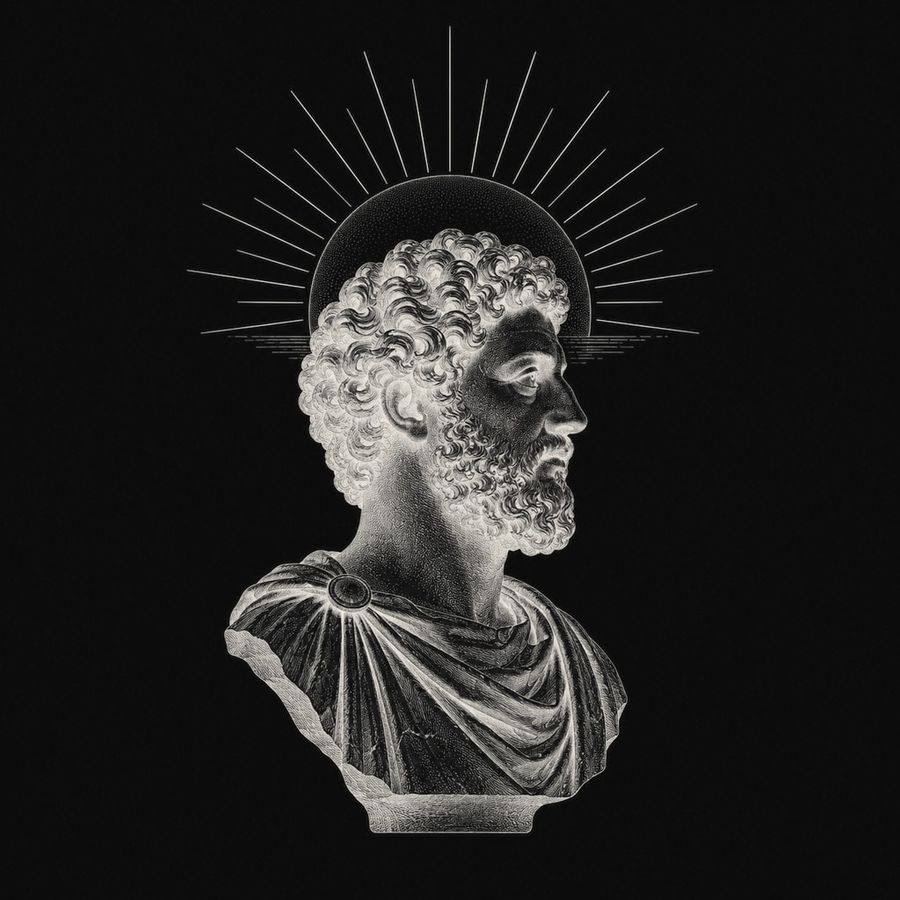
Marcus Aurelius was Roman emperor from 161 to 180 AD and the last of the “Five Good Emperors”. He was also a lifelong student of Stoic philosophy. Late in his life, probably while on military campaign along the Danube, he kept a notebook in Greek, addressed to himself. It was never meant to be read by anyone else. We call it the Meditations.
That private quality is why the book still works. Marcus is not lecturing. He is a tired, responsible man talking himself back to steadiness, again and again.
About this translation
George Long’s translation was first published in 1862. Its “thou” and “thy” can feel formal, but it is faithful and clear, and its numbering of books and sections is the one most modern editions follow. Long adds a few words in square brackets for sense; we have kept them. Many of the Marcus Aurelius quotes shared online come from recent translations that are still in copyright, which is why phrasings vary so much from site to site.
On mornings and difficult people
Begin the morning by saying to thyself, I shall meet with the busybody, the ungrateful, arrogant, deceitful, envious, unsocial. All these things happen to them by reason of their ignorance of what is good and evil.
Meditations 2.1, tr. George Long (1862)
The passage goes on to say that the person who does wrong is still “akin to me”, and that “we are made for co-operation, like feet, like hands, like eyelids”. Marcus is not bracing for a fight. He is preparing not to be surprised, so that he can stay kind.
Book 5 opens with another morning note. On days when he does not want to get out of bed, Marcus tells himself:
I am rising to the work of a human being. Why then am I dissatisfied if I am going to do the things for which I exist and for which I was brought into the world?
Meditations 5.1, tr. George Long (1862)
On the mind and its judgments
If thou art pained by any external thing, it is not this thing that disturbs thee, but thy own judgment about it. And it is in thy power to wipe out this judgment now.
Meditations 8.47, tr. George Long (1862)
The universe is transformation: life is opinion.
Meditations 4.3, tr. George Long (1862)
Such as are thy habitual thoughts, such also will be the character of thy mind; for the soul is dyed by the thoughts.
Meditations 5.16, tr. George Long (1862)
The image of a soul “dyed” by repeated thoughts is one of the most practical in the book. Whatever you think about every day, including whatever you scroll past every day, colours you.
Look within. Within is the fountain of good, and it will ever bubble up, if thou wilt ever dig.
Meditations 7.59, tr. George Long (1862)
On calm under pressure
Be like the promontory against which the waves continually break, but it stands firm and tames the fury of the water around it.
Meditations 4.49, tr. George Long (1862)
Men seek retreats for themselves, houses in the country, sea-shores, and mountains; and thou too art wont to desire such things very much. But this is altogether a mark of the most common sort of men, for it is in thy power whenever thou shalt choose to retire into thyself.
Meditations 4.3, tr. George Long (1862)
The art of life is more like the wrestler’s art than the dancer’s, in respect of this, that it should stand ready and firm to meet onsets which are sudden and unexpected.
Meditations 7.61, tr. George Long (1862)
On time and death
Do not act as if thou wert going to live ten thousand years. Death hangs over thee. While thou livest, while it is in thy power, be good.
Meditations 4.17, tr. George Long (1862)
Though thou shouldest be going to live three thousand years and as many times ten thousand years, still remember that no man loses any other life than this which he now lives, nor lives any other than this which he now loses.
Meditations 2.14, tr. George Long (1862)
The perfection of moral character consists in this, in passing every day as the last, and in being neither violently excited nor torpid nor playing the hypocrite.
Meditations 7.69, tr. George Long (1862)
Loss is nothing else than change.
Meditations 9.35, tr. George Long (1862)
On character and action
No longer talk at all about the kind of man that a good man ought to be, but be such.
Meditations 10.16, tr. George Long (1862)
If it is not right, do not do it: if it is not true, do not say it.
Meditations 12.17, tr. George Long (1862)
Take care that thou art not made into a Caesar, that thou art not dyed with this dye; for such things happen. Keep thyself then simple, good, pure, serious, free from affectation, a friend of justice, a worshipper of the gods, kind, affectionate, strenuous in all proper acts.
Meditations 6.30, tr. George Long (1862)
It is striking to hear the most powerful man in the Roman world warning himself not to become “a Caesar” in the worst sense: proud, grand and cut off.
On other people
How much trouble he avoids who does not look to see what his neighbor says or does or thinks, but only to what he does himself, that it may be just and pure.
Meditations 4.18, tr. George Long (1862)
The best way of avenging thyself is not to become like [the wrong-doer].
Meditations 6.6, tr. George Long (1862)
Men exist for the sake of one another. Teach them then, or bear with them.
Meditations 8.59, tr. George Long (1862)
The same thoughts in 1634: Meric Casaubon
The first English translation of the Meditations was made by Meric Casaubon in 1634. Soulfeed’s library uses George Long’s translation, but Casaubon is wonderful to read side by side with it. Casaubon numbers some sections differently, so his references do not always match modern editions.
Here is the promontory, nearly 230 years before Long:
Thou must be like a promontory of the sea, against which though the waves beat continually, yet it both itself stands, and about it are those swelling waves stilled and quieted.
Meditations 4.40 in Casaubon’s numbering (4.49 in modern editions), tr. Meric Casaubon (1634)
And the line about other people, which Long renders “Teach them then, or bear with them”:
All men are made one for another: either then teach them better, or bear with them.
Meditations 8.56 in Casaubon’s numbering, tr. Meric Casaubon (1634)
And a quieter one that has no famous modern version but deserves one:
How easy a thing is it for a man to put off from him all turbulent adventitious imaginations, and presently to be in perfect rest and tranquillity!
Meditations 5.2 in Casaubon’s numbering, tr. Meric Casaubon (1634)
More Stoic quotes: Epictetus and Seneca
Marcus learned much of his Stoicism from the teachings of Epictetus, a former slave who became one of the most respected teachers of his age. Epictetus wrote nothing himself; his student Arrian recorded his teaching, and the short handbook of it is called the Enchiridion.
Demand not that events should happen as you wish; but wish them to happen as they do happen, and you will go on well.
Epictetus, Enchiridion 8, tr. Thomas Wentworth Higginson (1865)
Remember that it is not he who gives abuse or blows, who affronts, but the view we take of these things as insulting.
Epictetus, Enchiridion 20, tr. Thomas Wentworth Higginson (1865)
Seneca, statesman and dramatist, wrote his Letters to Lucilius as practical advice to a younger friend. They are the warmest of the Stoic writings. We describe three of his best-known ideas in our own words here, because the standard English translation is still under copyright in the UK:
- Letter 1, on time: few people put a real value on their time or count what each day is worth, and few notice that they are dying a little every day.
- Letter 2, on wealth: poverty is not having too little; it is always wanting more.
- Letter 13, on fear: even bad luck is changeable. The thing you dread may come or may not, and for now it is not here, so expect better.
Key Stoic ideas in plain words
- What is up to us: our judgments, choices and actions. Almost everything else (other people, reputation, health, the weather) is not.
- Judgments, not things: what troubles us is mostly our opinion about events, which is why Marcus keeps returning to “opinion”.
- Virtue is the only true good: wisdom, justice, courage and self-control matter more than comfort or status.
- Memento mori: remembering death is not gloomy for the Stoics; it is a way to take today seriously.
- We are made for one another: Stoicism is not about withdrawing. It is about doing your part well in a shared world.
A Stoic daily reading practice
The Stoics practised their philosophy daily: a review of the day ahead in the morning, and of the day just gone in the evening. A simple version:
- Morning: read one section of Meditations. Ask what it asks of you today.
- During the day: when something upsets you, remember 8.47: is it the thing, or my judgment of it?
- Evening: one line in a notebook. What went well, what could be better, what you will try tomorrow.
Soulfeed’s Stoic mornings plan takes fourteen mornings with Marcus Aurelius and Epictetus, and Seneca: a week offers seven letters on time, anger and a calm mind. Each day has one passage, its meaning and a reflection question. Our guide to daily spiritual reading plans has more on building the habit, and if your mornings currently begin with a feed, see how to replace doomscrolling with ancient wisdom.
For the same ideas in another tradition, compare 5.16 on the soul “dyed by the thoughts” with the opening of the Dhammapada, or the promontory with Laozi’s water in Tao Te Ching quotes.
Read the Stoics in Soulfeed
Soulfeed’s Stoicism path includes Marcus Aurelius’ Meditations, Epictetus’ Enchiridion and Golden Sayings, and Seneca’s Letters, each passage with a modern rendering, its meaning, key terms and a question to sit with. Choose “Only my path” and your feed, widget and daily passage stay purely Stoic. Learn more in What is Soulfeed? or visit the Soulfeed home page.
Frequently asked questions
What is Marcus Aurelius' most famous quote?
Lines from Meditations such as 'The universe is transformation: life is opinion' (4.3), 'Be like the promontory against which the waves continually break' (4.49) and 'No longer talk at all about the kind of man that a good man ought to be, but be such' (10.16), all in George Long's translation, are among the most quoted.
Which translation of Meditations is public domain?
George Long's translation (1862) and Meric Casaubon's much older translation (1634) are both in the public domain. Many popular modern translations are still in copyright.
Why do Meditations section numbers differ between books?
Marcus did not number his notes. Later editors divided them into twelve books and numbered sections, and older translations such as Casaubon's sometimes split or join passages differently. Long's numbering matches the one most modern editions use.
Did Marcus Aurelius write Meditations for publication?
No. Meditations is a set of private notes the emperor wrote to himself, in Greek, probably during military campaigns late in his life. That is why it reads like a man reminding himself of what he already knows.
What is a good way to start reading the Stoics?
Read one short section of Meditations each morning, then try Epictetus' Enchiridion and a few of Seneca's Letters to Lucilius. Soulfeed's Stoic mornings plan takes fourteen days with Marcus Aurelius and Epictetus.